
How to Choose Artisan Glass: A Beginner’s Guide
Borosilicate, joint sizes, thickness and care — what actually separates a good piece from a cheap one.
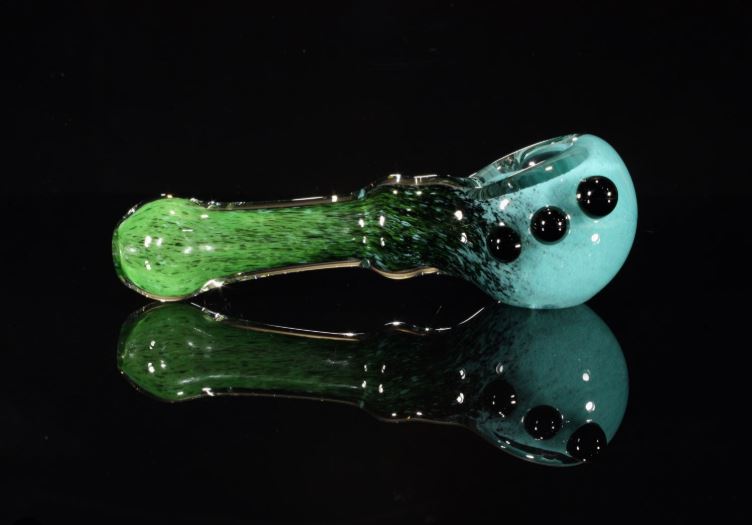
The short version
Four things separate a good piece of glass from a cheap one: the material (borosilicate, not soft glass), the joint size and fit, the wall thickness, and whether the detail is hand-worked or molded. Everything else is preference.
What is borosilicate glass?
Borosilicate is a glass formulation that contains boron trioxide, which gives it a very low coefficient of thermal expansion. In plain terms: it handles sudden temperature changes far better than ordinary soda-lime glass, which is why it is the standard for laboratory glassware and for quality pipes. Soft glass is cheaper and more prone to cracking under thermal stress.
If a piece does not say borosilicate, it is reasonable to assume it is not. Ask.
What do joint sizes mean?
Joints are the ground-glass connections between components. They are described by a diameter and an angle — 14mm and 18mm are the common diameters, at either a 45-degree or 90-degree angle. The two numbers have to match your other components, and a joint is either male or female. A 14mm male bowl will not fit an 18mm female joint.
- Measure or ask before you buy an accessory — the joint is the single most common sizing mistake.
- Match the angle, not just the diameter. A 45-degree joint and a 90-degree joint are not interchangeable.
- Bring the piece in if you are unsure. Comparing in person takes a minute and removes the guesswork.
Does thickness matter?
Wall thickness is usually given in millimetres, and it is a durability signal more than a quality one. Thicker walls — 5mm and up — take knocks better and feel more substantial in the hand. Thinner glass is lighter and often lets finer detail show. Neither is strictly better; a thick tube is more forgiving, a thin one is more refined.
How do you tell hand-worked from molded?
Look for the seam. Molded and mass-produced glass usually shows a faint vertical line where the mould halves met, and repeated pieces will be identical. Hand-worked glass has small asymmetries — a joint set slightly by eye, colour that moves differently across each piece, a signature or maker’s mark near the base. Those variations are the point, not a defect.
How should you clean and store it?
- 1Empty and rinse with warm — not hot — water. Sudden temperature swings are what crack glass, even borosilicate.
- 2Use a dedicated cleaning solution, or isopropyl alcohol with coarse salt as an agitator.
- 3Plug the openings, agitate gently, then let it sit rather than shaking hard.
- 4Rinse thoroughly with warm water until there is no solution smell left.
- 5Air dry fully before storing.
Store it standing on a stable surface away from edges, ideally padded. Most glass is not broken in use; it is broken by being knocked off a table.
PANACEA carries artisan glass in-store at 4914 Everhart Rd. Pieces change as they come in, so the selection on the floor is the current selection — it is worth asking what is new.
Frequently asked questions
What is the difference between borosilicate and regular glass?
Borosilicate contains boron trioxide, giving it a much lower rate of thermal expansion than ordinary soda-lime glass. It tolerates sudden temperature changes far better, which is why it is used for laboratory glassware and quality pipes.
What joint size do I need?
Match the diameter, the angle and the gender of your existing piece. Common diameters are 14mm and 18mm, at 45 or 90 degrees. A 14mm male accessory will not fit an 18mm female joint, so measure or bring the piece with you.
Is thicker glass always better?
No. Thicker walls are more durable and feel more substantial; thinner glass is lighter and often shows finer detail. It is a trade-off between resilience and refinement, not a quality ranking.
How do I clean artisan glass without damaging it?
Rinse with warm water rather than hot, use a dedicated cleaner or isopropyl alcohol with coarse salt, agitate gently and let it soak instead of shaking hard, then rinse thoroughly and air dry completely before storing.